 photo HiTech.Expert
A unique scientific operation has flared up at the coldest and most remote corner of the Earth, near the Sun Pole.. Astronomers are working on over a hundred melted ice floes as the largest cosmic observatory for observing neutrinos - the most common particles produced in the most complex cosmic processes.. This advanced technology opens up new horizons for the bright Universe.
Ice paste for space travelers.
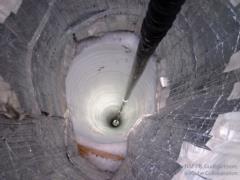
The initiative, known as the IceCube Neutrino Observatory, transmits strings of long strings with detectors the size of a basketball ball at a vertical drill hole.. After filling with water, open the liquid to freeze, condensing the crystal matrix, which becomes a sensitive instrument for registering weak black light.. This is due to the fact that high-energy cosmic neutrinos, which have come from billions of light rocks, mix with ice molecules, writhing secondary particles.
IceCube has already successfully detected thousands of such cosmic messengers, providing invaluable information about extreme phenomena in the Universe, such as supernova turbulence, active galactic nuclei and turbulent processes associated with.
Sign of approval.
What is IceCube's greatest achievement: one of the pioneers of the IceCube revolution accepts the Nobel Prize in Physics for his revolutionary contributions. This reinforces the significance of the observatory’s work and its role in advancing our understanding of space objects.. Since its inception in 2010, IceCube has become the largest neutrino detector in the world, which confirms the ambitions and successes of mankind in discovering the smallest particles and the largest cosmic secretions.
Dzherelo: NASA At the Pole, cosmic neutrinos fly: a new era in astronomy, read on the HiTech website. Expert.