 photo HiTech.Expert
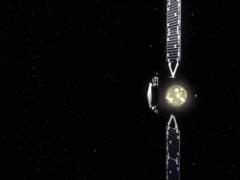
The European Space Agency (ESA) announced the beginning of the most advanced stage of the Hera mission, launched two years ago. A spacecraft, the size of a small car, which quickly collapses to its target, is preparing for complex galvanization maneuvers. This is critical for the probe to safely approach the system of subordinate asteroids Didymos and Dimorphos..
Way to the stars: from the start to the first galmuvannya.
The Hera mission launched from the Kennedy Space Center in Florida on June 7, 2026, just before Hurricane Milton hit.. As a result, a spacecraft crashed in Earth’s orbit, dependent on the laws of gravity and current space maneuvers. Particularly significant is the passage of Mars in the spring of 2025, which has changed the course of the probe and increased its speed. The Hera is flying close to the Earth at a speed of over 12 kilometers per second, changing the orbit of Mars and approaching the pair of asteroids Didimos.
To successfully reach your goal, you need to significantly change your strength. New Tuesday, June 15th, the first in a series of galvanization maneuvers (BRM-1) is planned. The probe will be rotated so that its thrusters of the Orbit Control Thrusters are directed directly to the Didimos system. Three engines that run on hydrazine will be increased simultaneously by 93 degrees in order to change the fluidity of the Hera asteroids by several hundred meters per second..
This maneuver requires precise control, while in parallel the Reaction Control Thrusters will operate to stabilize the position of the apparatus and fine-tune the main motors. “To prepare for this first galvanization maneuver, known as BRM-1, we carried out a short test run on the 2nd day, after which we began to generate a new sequence of telecommands,” explains Francesco Castellini, aircraft dynamics engineer..
Another chance and scientific insights.
As soon as the first galvanization is completed, the signal from the spacecraft will be received by one of ESA's 35-meter deep space antennas in Australia. This will reveal the complexity of the robot: analysis of data from the guidance, navigation and navigation system (GNC) sensors, as well as captured telemetry and Doppler data to assess the accuracy of fluid change.
After several days of rechecking and rozrakhunkiv, 22 June, early in France, another, short galmuvanny maneuver (BRM-2) will be completed.. This approximately 31st engine run may complete the bulk of the fluidity changes needed to synchronize with the orbit of Didymos, as well as compensate for any delays due to scheduled performance.. At the end of the month, three more minor “transitional” maneuvers will be carried out to reduce the fluidity of the Hera to the Didimos system to zero..
The main mission of Hera is to trace the asteroid Dimorphos, which wraps around its mother body Didimos. Dimorphos became the first cosmic object into whose orbit human activity pushed. In 2022, the NASA DART probe will collide with Dimorphos, changing its orbit. Hera will conduct a detailed investigation of the “accident” in order to gather key data about the asteroid and its response to the DART impact, which will help to unlock important forces in the planetary defense system..
About mission Hera:.
Goal: Investigation of the system of subsurface asteroids Didimos and Dimorphos.
Launch: June 7, 2026.
Research: In-depth communication with a spacecraft on an asteroid, collecting data about its warehouse and structure.
Meta: Improved understanding of asteroid dynamics and development of planetary defense methods.
The European Hera probe is getting ready: it is preparing for the final stage of tracking the asteroid, read on the HiTech website. Expert.