 photo Зеркало недели
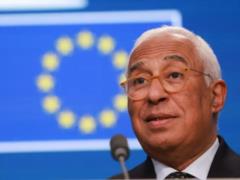
European Council President Antonio Costa, at a press conference after the European Council meeting in Brussels, explained his decision to explore the possibility of opening a diplomatic channel between the EU and Russia. Previously, such a step caused warnings from Germany and France.
Answering the question why he tried to open a diplomatic channel with Russia without first informing all EU countries, Costa said that they had a good and useful discussion to clarify all misunderstandings, an Ukrinform correspondent reports..
“The European Union is on the side of Ukraine. We are with Ukraine during the war, and we will be with Ukraine after the war,” said the President of the European Council.
Koshta also admitted that there are still no reliable signals about Russia’s readiness for serious negotiations. Despite this, he explained that through his office he is working to create a diplomatic channel so that the EU can independently understand Russian messages and directly convey its position to Moscow.
[see_also ids\u003d"
In addition, he stated that different diplomatic platforms should not compete with each other or contradict each other. Such efforts must work together, but only Ukraine itself can speak on behalf of Ukraine in negotiations.
“Of course, the Coalition of the Willing and its leaders also have a role to play in matters of security guarantees. At the same time, the interests of the European Union must be protected by the EU institutions in accordance with the Union treaties,” Costa emphasized. In addition, he added that he always works as a team together with the President of the European Commission Ursula von der Leyen.
Meanwhile, during the same press conference, Ursula von der Leyen said that Ukraine and Europe are striving to end the war, while Russia continues to rely on force. She also emphasized that the main word in this process should remain with Ukraine, and the European Union will support Kyiv.
[see_also ids\u003d"
The EU has been discussing for several months whether it is worth establishing contacts with Putin at all, what they could be and who should conduct such a dialogue.
Ad
Thus, during the summit in Brussels, French President Emmanuel Macron and German Chancellor Friedrich Merz were skeptical of Costa’s initiative to establish contacts with the Kremlin. The head of the European Council acted on behalf of all 27 EU governments, but some other European leaders supported his position.
Meanwhile, President Vladimir Zelensky previously stated that Europe should be represented in negotiations with the Russian Federation. According to him, it is necessary to determine who will represent Europe.